
Manganese in Water: Health Effects, Removal Methods and Testing
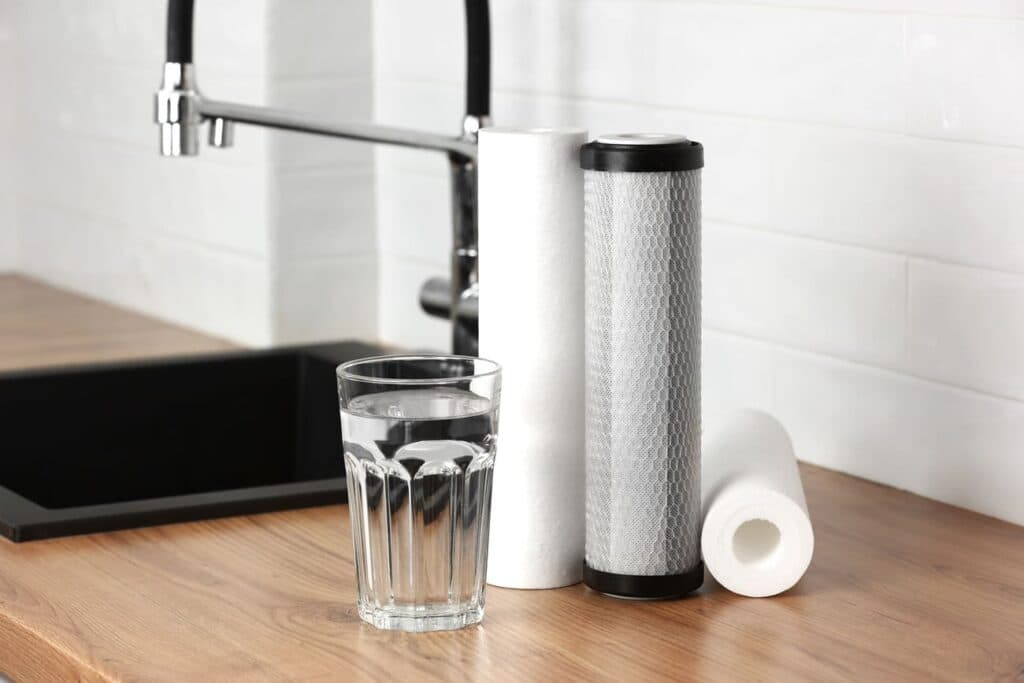
Manganese – is a heavy metal naturally found in rock formations. Under the effect of natural conditions, groundwater leaches manganese out of rock, which is why it is often found in borehole water. Chemically, manganese closely resembles iron, so these two metals are frequently found together in water.
The article explains what manganese is and why it occurs in water, presenting its typical signs – dark color, a metallic taste, and black sediment. It also covers manganese's effects on the human body and the symptoms of chronic poisoning. It then presents effective methods for removing manganese – aeration, reverse osmosis, distillation, and filtration, and finally highlights the importance of water testing and the benefits of choosing the right solution. All of this is covered in the article below.
How to Recognize Manganese in Water?
An elevated manganese concentration has clear signs:
- the water takes on a bitter, metallic taste;
- water left standing for a while turns dark gray or black;
- sinks, pipes, and plumbing fixtures turn black;
- an unpleasant odor develops.
These signs indicate that manganese is dissolved in the water or that manganese oxide sediment has formed. Over time, this metal can clog the water system, impair heat transfer in the pipelines, and significantly reduce water quality.
Why Is Manganese Dangerous to Human Health?
Small amounts of manganese are essential to the human body, but once the permissible limit is exceeded, this element becomes toxic.
Long-term consumption of water saturated with manganese causes chronic poisoning.
The lungs, liver, and brain are affected first.
The most common symptoms are:
- persistent drowsiness and weakness;
- apathy and difficulty concentrating;
- poor appetite and digestive disorders;
- headaches;
- in advanced cases – muscle cramps and coordination disorders.
For these reasons, removing manganese from water is one of the most important factors in ensuring water safety.
How to Remove Manganese from Water?
The method used to remove manganese depends on its concentration and on other impurities in the water. The most commonly used methods are:
1. Water Filters and Aeration
Aeration – an effective method in which oxygen is introduced into the water. It oxidizes the dissolved manganese, and the resulting solid particles are captured by a sediment filter. This method works well when manganese is found together with iron.
2. Treat with Reverse Osmosis
Reverse osmosis completely removes manganese, iron, and other heavy metals.
The water is passed through a semi-permeable membrane that retains even the smallest metal particles.
This method is especially effective when the manganese concentration is high.
3. Distill the Water
Distillation – a physical process in which water is boiled up to 100 °C and the vapor is condensed back into liquid.
This produces clean water, while the manganese sediment remains in the distillation unit.
This method requires a lot of energy but removes even solid sediment.
4. Use a Water Softener or Iron Removal Filter
A water softener removes manganese and iron while also softening the water.
If the water also contains other compounds, such as arsenic or hydrogen sulfide, an iron removal filter is recommended.
In cases of heavy contamination, individual solutions are applied, combining several filtration technologies.
When Should You Test Your Water?
Water testing is essential when:
- the water changes color or odor;
- black sediment is noticeable;
- a new borehole has been installed;
- household members experience unexplained health issues.
Chemical water analysis is carried out by independent laboratories, which determine the concentrations of manganese, iron, and other metals. Accurate test results make it possible to choose the right filtration system.
Why Is It Important to Remove Manganese?
Manganese not only harms health but also damages household equipment.
Its oxides blacken plumbing, clog pipes, and disrupt heat transfer in heating systems.
In addition, water containing manganese loses clarity and becomes unfit to drink.
A properly chosen filtration system ensures that water is completely purified of manganese, iron, and other metal compounds. Households with elevated manganese or iron levels are advised to choose an iron removal filter or a water softening system. If you are looking for water filters for an office or public space, a practical choice is the U7 RO drinking water filtration system from Germany, so that employees and clients can always enjoy high-quality drinking water. Investing in the right water treatment equipment not only protects health but also extends the service life of pipelines and household appliances.
Manganese in Water: FAQ
How Much Manganese Is Allowed in Water?
Under European Union requirements, the permissible manganese level is up to 0.05–0.1 mg/l.
Above this limit, the water is considered unfit for consumption.
Why Is Manganese Often Found Together with Iron?
Manganese and iron are naturally occurring metals found in the same rock formations. In groundwater, they dissolve under similar conditions, which is why they are usually found together.
Which Method Is Most Effective for Removing Manganese?
The most effective method depends on the amount of manganese.
- At low concentrations – aeration or a water filter.
- At high concentrations – reverse osmosis.
For mixed contamination – a combined system with several filtration stages.