
Bad-Tasting Water: Causes, Solutions, and How to Restore Its Natural Taste
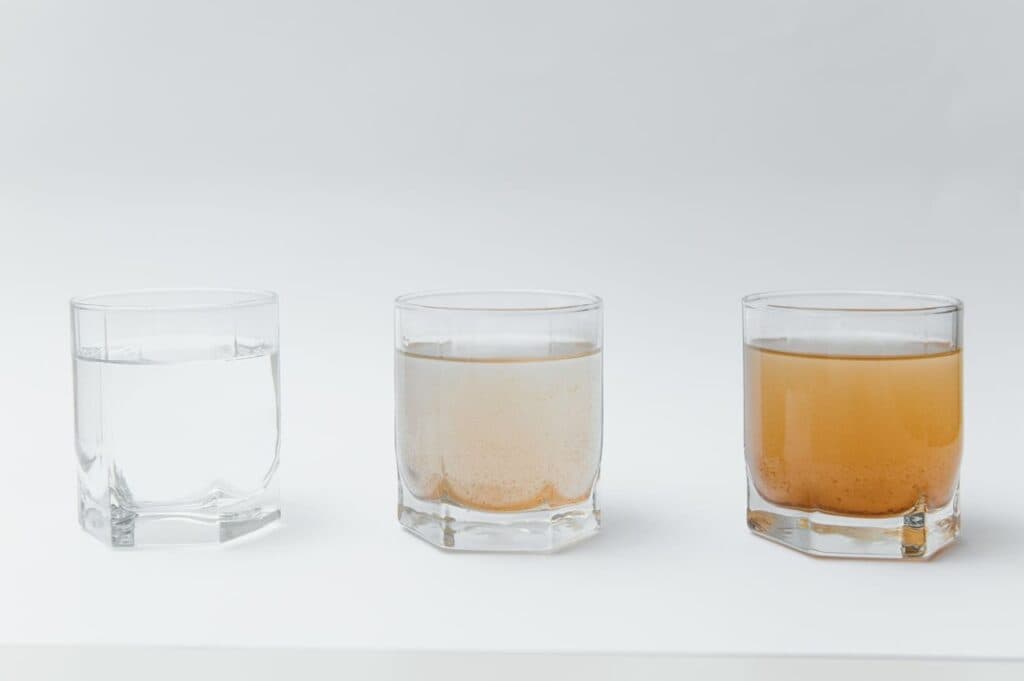
Bad-tasting water – is drinking water whose natural mineral balance has been disrupted or which contains chemical impurities. Changes in taste are most often caused by excess sodium, a lack of minerals, chlorine, iron, or organic matter. The right filtration and mineralization system restores a clean, balanced taste.
This article explains why water loses its natural taste and which chemical compounds or filtration processes are responsible. It covers the main causes – mineral imbalance, sodium, chlorine, iron, and organic matter. It also offers tips on how to identify the cause of bad-tasting water, why filtered or softened water can turn flat, and how to choose the right technology – from UV disinfection to mineralization. We cover all of this in the article below.
Why Does Water Taste Bad?
There are 5 main reasons why water loses its taste:
- Too few minerals
Water becomes "flat" or "tasteless" when natural minerals such as calcium (Ca²⁺), magnesium (Mg²⁺), and potassium ions are removed. This often happens with cheaper reverse osmosis (RO) filters, which remove almost all dissolved substances. The result is water that's nearly distilled, which isn't optimal for the human body. - Excess sodium
When water softening filters are used, calcium and magnesium ions are replaced with sodium (Na⁺) ions. This makes the water "soft," but it loses its natural taste and takes on a slightly salty aftertaste. What's more, such water isn't suitable for people with high blood pressure. - Chemical impurities and compounds
An unpleasant smell or taste can be caused by compounds such as hydrogen sulfide (a rotten-egg odor), chlorine, ammonia, or phenol (a medicinal smell). Water disinfected with chlorine often takes on a chlorine or chlorophenol aftertaste. - Elevated iron and manganese levels
Iron (Fe³⁺) and manganese (Mn²⁺) compounds give water a metallic or inky taste. This is often found in well water, especially when it isn't properly aerated or biologically treated. - Organic matter and algae residue
Humic substances (humic and fulvic acids) and algae give water a peaty or earthy taste and a yellowish tint. This can occur in water from surface sources or old pipelines.
How to Identify the Cause of Bad-Tasting Water
Water's smell and taste are assessed organoleptically – that is, through human senses.
The odor or taste threshold indicates the lowest concentration of impurities that a person can detect.
According to Lithuanian hygiene standard HN 24:2003, drinking water must be "acceptable to consumers and free of atypical changes."
This means that more than 90% of consumers should not notice any unpleasant odor or aftertaste.
Key Indicator Parameters Used to Assess Water Quality:
- Color ≤ 30 mg Pt/L
- pH 6.5 – 9.5
- Specific electrical conductivity (EC) ≤ 2500 μS/cm
- Iron (Fe) ≤ 0.2 mg/L
- Manganese (Mn) ≤ 0.05 mg/L
- Ammonia (NH₄⁺) ≤ 0.5 mg/L
- Chlorides (Cl⁻) ≤ 250 mg/L
- Sulfates (SO₄²⁻) ≤ 250 mg/L
- Sodium ions (Na⁺) ≤ 200 mg/L
If the water meets these parameters but still tastes bland, the cause usually lies in the filtration technology or an improper mineral balance.
Why Can Filtered Water Taste Bad?
Not all filtration systems are suitable for drinking water.
Water softening filters change the chemical composition – sodium replaces calcium and magnesium ions. As a result, the taste becomes artificial.
Cheap reverse osmosis filters remove not only impurities but also all the beneficial minerals. The water becomes "dead" – tasteless and less beneficial to the body.
Some manufacturers install synthetic mineralizers, but the body doesn't absorb their compounds, so this kind of mineralization is only an imitation.
How to Improve the Taste of Water?
To restore water's natural, healthy taste, you need to:
- Use the right filtration technology.
Choose a system that retains natural minerals.
For example, the W23 hydrogen-enriched water dispenser doesn't just filter — it also enriches the water with molecular hydrogen and natural minerals. - Ensure the proper pH level.
An optimal alkaline pH (around 8) improves taste and helps maintain the body's acid – base balance. - Maintain a negative ORP (oxidation-reduction potential).
A negative ORP helps neutralize free radicals, which makes the water biologically active and "alive." - Use UV disinfection.
A UV lamp destroys bacteria without affecting the taste, unlike chlorine or chemical disinfectants. - Ensure proper mineralization.
The W23 dispenser mineralizes water with natural mountain minerals, without synthetic additives, so the taste stays smooth and balanced.
If the water still has an unpleasant aftertaste or smell after replacing your water filters, it's recommended to additionally install a drinking water RO system with a mineralizer.
When Is Water Considered Fit to Drink?
According to World Health Organization (WHO) recommendations and Lithuanian hygiene standard HN 24:2003, safe, good-tasting drinking water must meet the following criteria:
- Nitrates ≤ 50 mg/L (≤10 mg/L for infant formula)
- Nitrites ≤ 0.5 mg/L
- Fluoride 0.7 – 1.5 mg/L (optimal 1 mg/L)
- Must contain no coliform bacteria (0/100 mL)
- Odor and taste acceptable to consumers
To Drink Truly Good-Tasting, Healthy Water, It's Important to Ensure:
- a natural mineral balance,
- a proper pH,
- a negative ORP,
- and safe disinfection without chemical additives.
A properly chosen water treatment solution isn't just about taste – it's a guarantee of health, too.
Bad-tasting water is not a minor detail – it's an indicator of water quality.
Its taste and smell depend on its chemical composition, mineral balance, and filtration method.
Water that's been over-purified or improperly softened loses its vitality, while over-mineralized water takes on an unpleasant taste.
To permanently solve the problem of bad-tasting water, it's important to choose the right filtration and supply solutions suited to different environments – both home and office. For homes, you'll find CTO activated carbon cartridges, which remove chlorine and organic compounds; FE iron-removal cartridges, which reduce the metallic aftertaste; and the Aqua Gutta CORAL-S and PHANTOM-XL water softening filters, which help reduce sodium, calcium, and magnesium imbalance. For offices or companies where convenience and performance matter, we recommend visiting: Water Filters for Offices: the QUATREAU Smart Tap ensures a hygienic supply of hot and cold water, while the AG SODA TAP lets you prepare sparkling water without additional additives. If you need a universal solution, the WL 4 FW HCS C or AG-COOLER-HCS-BLACK drinking water units ensure a continuous supply of clean, balanced, good-tasting water for both work and everyday use.
Bad-Tasting Water: FAQ
What Do the Parameters Mean?
Water's pH – reflects its acid-base balance. Iron content gives water a metallic aftertaste, while manganese can cause a bitter note. Ammonia produces a fishy or musty smell, chlorides add saltiness, and sulfates add bitterness. Sodium produces a slightly salty aftertaste. All these parameters help assess whether the water is not only safe but also pleasant-tasting.
Is Softened Water Safe to Drink?
Softened water isn't harmful, but it shouldn't be your main source of drinking water.
Elevated sodium levels can affect blood pressure and taste.
The best solution is a two-stage system: first a softening filter, then a drinking water filter, which ensures cleanliness and good taste.