
Great-tasting water: composition, properties, and how to recognise quality water
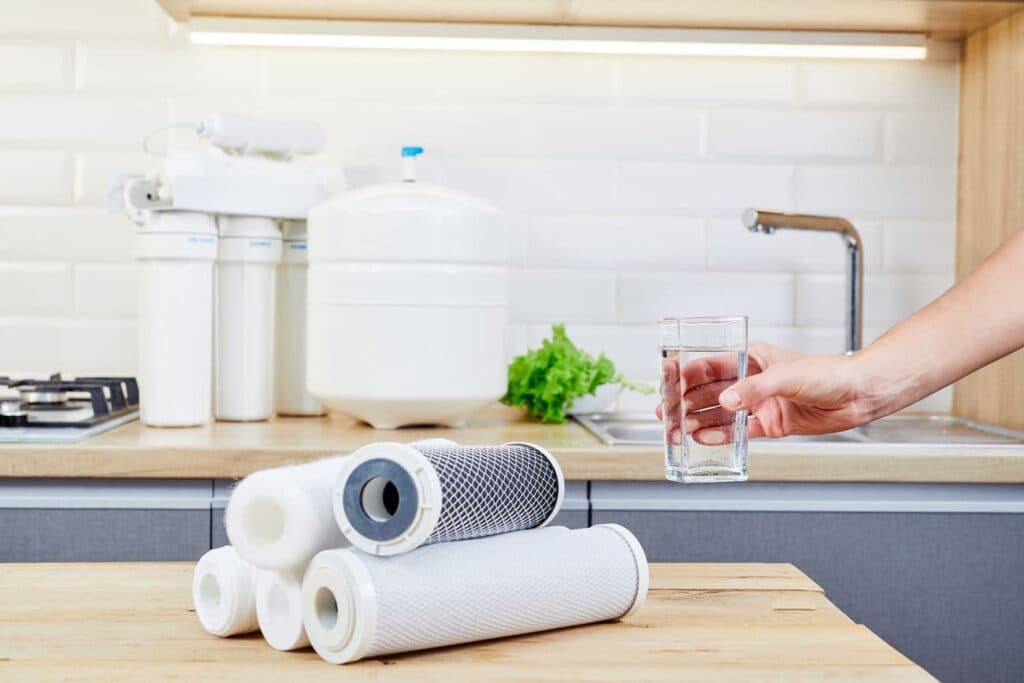
Great-tasting water is chemically clean yet mineral-rich water, with a balanced content of calcium, magnesium, and sodium ions. It has a mild taste, a suitable pH (6,5 – 9,5), and no foreign odours or colour. This kind of water comes from natural springs or properly filtered groundwater.
This article explains what determines the taste of water and how the balance of minerals and pH creates a mild, well-rounded flavour. It looks at why distilled water is considered flavourless, which substances and limits determine taste quality, and why great-tasting water isn't always safe. It then offers tips on choosing water that's both tasty and safe, explains the differences between mineral, spring, and table water, and highlights the properties of the best water. We cover all of this in the article below.
Which substance concentrations determine the taste of water?
Under Lithuania's drinking water hygiene standard HN 24:2003, the taste and odour of water must be acceptable to consumers and show no atypical changes. Water quality is defined by several key indicators: chloride and sulphate levels must not exceed 250 mg/L, sodium – 200 mg/L, ammonia – 0,5 mg/L, iron – 0,2 mg/L, and manganese and aluminium – 0,05 – 0,2 mg/L each. The water's acidity (pH) must range from 6,5 to 9,5. Colour must not exceed 30 mg Pt/L, and the level of organic matter, measured by the permanganate index, – 5 mg O₂/L. These parameters determine not only the water's cleanliness but also the quality of its taste.
Is great-tasting water always high-quality?
No. Experts say that great-tasting water isn't always safe.
Well water often contains nitrates (NO₃⁻), nitrites (NO₂⁻), and microorganisms that have no effect on taste but pose a risk to health.
An excess of nitrates or bacteria is found in roughly half of Lithuania's wells.
Permissible limits:
- Nitrates ≤ 50 mg/L, for infant food – ≤ 10 mg/L
- Nitrites ≤ 0,5 mg/L
- Fluorides ≤ 1,5 mg/L
An excess of these compounds is dangerous for pregnant women and infants, as it can cause a lack of oxygen in the blood (“blue baby syndrome”) and other health problems.
How can you make sure your water is both tasty and safe?
To enjoy water that's both tasty and safe, you need to:
- Test the water's composition – especially well water. Testing is carried out by the National Public Health Surveillance Laboratory (NVSPL).
- Use water filters – if an excess of nitrates, iron, or organic matter is detected.
- Boil tap water only for sanitary purposes – boiling destroys microbes but not chemical substances.
- Choose natural mineral or spring water – these waters have a balanced mineral composition.
- Avoid highly mineralised water if you have kidney disease. In some countries, such water may only be sold in pharmacies.
What's the difference between mineral, spring, and table water?
- Natural mineral water – drawn from an underground source, its chemical composition cannot be altered. Only the removal of impurities or carbonation with CO₂ is allowed.
- Spring water – natural, with no added minerals.
- Mineralised (table) water – produced by diluting spring water or supplementing it with mineral substances.
The difference lies in the level of mineralisation.
Low-mineralisation water is suitable for everyday consumption without restriction.
Highly mineralised water has a physiological effect and should be consumed only in limited amounts.
What's considered the best water?
The best water is clean, has a balanced taste, an optimal mineral content, and no signs of contamination.
Such water has a pH of around 7 – 8, and low to moderate overall mineralisation.
It should be colourless, odourless, and free of any foreign aftertaste.
Groundwater in Lithuania is considered among the cleanest in Europe.
Lithuania and Denmark are the only countries where the entire drinking water supply system relies on underground resources.
Taste is not just a subjective sensation – it's a clear physical indicator that reflects the water's chemical composition, cleanliness, and its effect on the body.
To make sure great-tasting water is not only pleasant to drink but also consistently safe, it's worth investing in a proper filtration system. For home users, water filters such as the Aqua Gutta CORAL-S water softening filter are a great fit. They effectively remove iron, chlorine, sediment, and organic impurities while preserving the water's natural taste. For offices or higher-volume use, water filters, such as the U7 RO drinking water filtration system or the AG-BODY-BALANCE, as well as the modern QUATREAU Smart Tap or AG SODA TAP systems, which let you prepare still or sparkling water straight from the tap. These technologies ensure that the water is clean, well-balanced in taste, and always available both at home and in the workplace.
The taste of water: FAQ
Why is flavourless water considered unpleasant to drink?
Distilled water contains no dissolved minerals. Human taste receptors respond to the presence of minerals, so without them water tastes flat and “lifeless”. Although this kind of water is clean, it has no taste qualities of its own.
Which minerals give water its taste?
The taste of water is shaped by four main minerals: calcium (Ca²⁺), magnesium (Mg²⁺), sodium (Na⁺), and sulphates (SO₄²⁻).
Calcium adds smoothness, magnesium – bitterness, sodium – saltiness, and sulphates – sharpness. The right balance between them creates a well-rounded taste.
Is boiled water safe to drink?
Boiling destroys microorganisms but does not remove nitrates or chemical compounds. It is therefore only effective for biological, not chemical, water purification.
Which water is best suited for everyday drinking?
Low-mineralisation water is suitable for everyday consumption.
It places no extra strain on the kidneys, maintains a natural mineral balance, and can be consumed without restriction.
Highly mineralised water should be consumed only in limited amounts and, in some countries, is sold only in pharmacies.
Which water contains the most oxygen?
The highest levels of dissolved oxygen are found in spring and mountain water.
This gives the water a refreshing quality. Oxygen has no effect on chemical safety, but it does heighten the sensory feeling of “freshness”.