
What Are Water Iron Removal Filters? How They Work
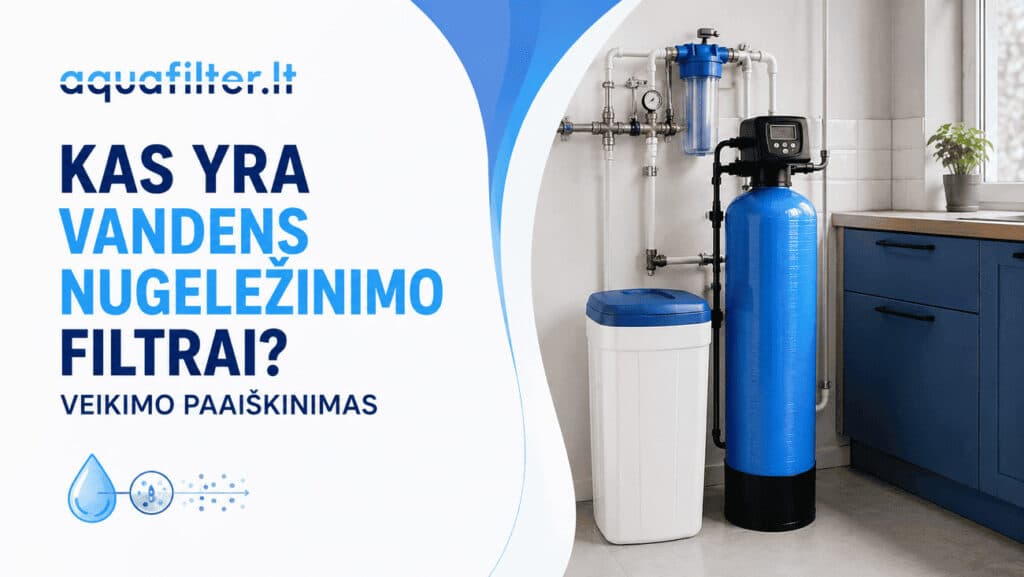
Most people only start thinking about iron in their water once brown stains appear on plumbing fixtures, laundry starts turning yellow, and the water from the tap takes on a metallic taste. While this may seem like a minor inconvenience at first glance, over time elevated iron and manganese levels not only degrade water quality but also shorten the service life of household appliances and plumbing systems.
Water iron removal filters are used to solve exactly this problem. They work on a simple principle: dissolved iron and manganese are first converted into filterable particles, then removed from the water. However, not all filters work the same way – the right solution depends on the iron concentration, the water's pH, the manganese level, and other chemical parameters.
In this article, we'll explain how water iron removal filters work, how the main types differ, and in which cases additional aeration or combined solutions are needed. We'll also cover how to recognize iron-rich water, which criteria to use when choosing a filter for your home, and what operating costs to expect in the long run.
How do water iron removal filters work?
A water iron removal filter removes iron and manganese in two stages: oxidation and filtration. The dissolved metals are first converted into solid particles, then captured in the filter media.
In well water, iron and manganese are usually dissolved – in the reduced divalent iron (Fe²⁺) and divalent manganese (Mn²⁺) forms. This is why water straight from the tap looks clear, yet after standing in air it oxidizes and leaves orange-brown (iron) or black (manganese) deposits.
According to Penn State Extension data, this situation is typical when the water's pH is below 7.0, since metals remain dissolved for longer in a more acidic environment.
During the oxidation stage, dissolved iron (Fe²⁺) converts into an insoluble solid form (Fe³⁺). This conversion is essential, because only solid particles become large enough to be captured mechanically.
During the filtration stage, the oxidized particles build up in the filter media. Once the media becomes loaded with sediment, it is cleared during backwashing, which flushes out the accumulated rust and restores the media's performance.
Two main methods are used to speed up oxidation. Aeration saturates the water with air, supplying oxygen for the reaction, while catalytic media accelerate the conversion itself through their surface.
The main types of filter media differ precisely in their oxidation mechanism:
- Catalytic media – speed up oxidation through their surface, so the reaction happens faster.
- Aeration systems – supply oxygen before filtration, making them suitable for low-pH water.
The right filter media is selected based on iron concentration and water pH, and these parameters determine the choice of a specific filter type.
Types of water iron removal filters
The filter type is chosen based on iron concentration, water pH, and water consumption, since these parameters determine the most suitable oxidation method.
- Single-tank filter – catalytic media designed for lower iron concentrations, given a sufficient pH.
- Two-tank filter with aeration – designed for high iron and manganese concentrations and low pH.
- Combination filters – remove iron and soften the water at the same time.
Single-tank iron removal filter
A single-tank filter with catalytic media suits lower to medium iron concentrations, when the water's pH is sufficient for spontaneous oxidation. Under these conditions, dissolved iron oxidizes as it passes through the media, so additional aeration is not required.
This system is compact and takes up less space, making it a good fit for homes where the iron level isn't high and boiler-room space is limited.
Regeneration takes place during backwashing. During this cycle, the water flow flushes the captured oxidized-iron deposits out of the media, so the filter regains its throughput and continues to work efficiently.
Two-tank filter with aeration (injector / compressor)
A two-tank system with aeration is designed for high iron and manganese concentrations and low-pH water, where spontaneous oxidation happens too slowly. The air introduced into the water speeds up the reaction, so the metals reliably convert into filterable particles even in a more acidic environment.
Aeration is achieved in two ways. An injector draws in air using the Venturi principle, where flowing water creates a pressure drop. A compressor, by contrast, supplies air under pressure, so the water is saturated more intensively and the system suits higher-capacity applications.
The first tank handles oxidation, the second handles filtration. Because these processes are separated, the system effectively removes not only iron and manganese but also hydrogen sulfide, which causes a rotten-egg smell.
Two in one: iron removal and water softening filters
Iron removal filters remove iron and manganese, while water softeners remove the calcium and magnesium compounds that cause water hardness. These are two separate functions addressing different problems, so one filter doesn't automatically solve both.
When water has both an elevated iron level and high hardness, you can choose one of two solutions: a combined "two-in-one" filter or two separate systems. The choice depends on the iron concentration and other water parameters.
A combined solution is more advantageous when the iron concentration isn't high and space is limited in the household. A single tank takes up less room and operates on a single regeneration cycle, which makes maintenance simpler.
Two separate tanks pay off when the iron concentration is high. In that case, the iron is first oxidized or removed in a separate tank, because otherwise the oxidized particles would coat the softening resin. This would reduce the resin's capacity faster and make the ion-exchange process less effective.
In practice, this means the iron must be removed or converted into filterable particles before the water reaches the softening stage. This process sequence protects the more expensive softening media from premature wear.
Manganese removal often takes place alongside iron removal, since these two metals are usually found together in water. You can read more about manganese removal in a separate article.
How to recognize iron-rich water and when you need a filter
Iron-rich water is usually given away by signs visible around the home, even if the water coming from the tap looks clear. The main signs are:
- Brown or orange stains on plumbing fixtures, toilets, and white laundry.
- A metallic taste when drinking water or cooking.
- Black manganese deposits on faucets and ceramic fixtures.
- A rotten-egg smell caused by hydrogen sulfide.
These effects occur because dissolved metals oxidize on contact with air and turn into deposits. Recognizing the signs of iron-rich water helps you catch the problem at an early stage.
Iron and manganese don't pose a direct health risk, so an excess of them in water is usually considered an aesthetic (secondary) issue. However, these substances have a negative effect on plumbing, dishwashers, laundry, and water heaters, which is why filters are often installed at the point of entry to the whole house, to protect every point of water use.
Iron-rich water also creates favorable conditions for iron bacteria to multiply. In the well and pipework, they form slimy brown deposits. Such bacterial colonies must be eliminated, for example through shock chlorination, before installing a filter, otherwise they will remain in the well and continue contaminating the water.
The exact iron and manganese levels can only be determined through a laboratory water test, so the filter is selected based on actual measurements rather than visual signs.
How to choose a water iron removal filter for your home
The right filter is determined by several water parameters that you need to know before purchasing it. The main selection criteria are:
- Iron concentration (mg/l) – determines whether a single-tank filter is enough or a system with aeration is needed.
- Water pH – determines the oxidation rate and the choice of suitable filter media.
- Manganese concentration – manganese oxidizes more slowly than iron, so additional aeration is often required.
- Presence of hydrogen sulfide – an important factor if a rotten-egg smell is noticeable.
- Water consumption (capacity) – the filter's flow rate and capacity must match the household's needs.
Without precise parameters, it's impossible to select either the right filter media or the right filter type, so a laboratory water test must be carried out before purchasing a filter. This is done at certified testing laboratories, which provide exact values for iron, manganese, and water pH.
According to HN 24:2023, the indicative iron value in drinking water is 0.2 mg/l. This figure helps assess how far the iron concentration in a specific well exceeds the set value and what system capacity might be needed.
Low pH makes iron removal more difficult, because oxidation proceeds more slowly in a more acidic environment. As a result, such water often requires aeration or pH correction before filtration, otherwise the dissolved iron won't have time to convert into filterable particles.
Every borehole or well has its own chemical composition, so the filter is selected individually based on the specific water parameters. Working with certified laboratories helps ensure that the chosen solution matches the real water parameters.
How much do water iron removal filters for the home cost?
The price of a water iron removal filter depends on the type of solution chosen. Simpler systems generally cost less, while more complex units that use additional aeration or combine several functions cost more. Roughly speaking, three price groups can be distinguished:
- Single-tank filter with catalytic media – the lowest price group, suitable for low to medium iron concentrations.
- Two-tank system with aeration – a higher price group due to the extra oxidation stage and aeration equipment (injector or compressor).
- Combined iron removal and softening filter – the highest price group, since one unit combines two water-treatment functions.
The exact price is determined by the water parameters, the required system capacity, and the chosen media type, so it can only be established after a laboratory water test. Without this data, it's impossible to select the right filter, which means the solution and its price are individual in every case.
Operating costs add to the initial investment. The filter media needs periodic replacement, softening systems require topping up with salt, and the regeneration and backwashing cycles use water and electricity.
It's also worth weighing these systems' drawbacks. They need space in a utility room, periodic maintenance, and extra water is used during regeneration and backwashing. Even so, this investment pays off over time, since the filter helps protect plumbing, dishwashers, laundry, and water heaters from rust and deposits.
Longevity depends on regular maintenance and timely replacement of consumables. You can find more information in the "Water Filter Maintenance" section, which explains how to keep the system running at stable efficiency.
Water iron removal filters: frequently asked questions
Do I need a separate water softener if I already have an iron removal filter?
Yes, if the water is hard, because an iron removal filter only removes iron and manganese, not the calcium and magnesium compounds that cause water hardness. These are two different functions, so one system doesn't automatically solve both problems.
If both problems are present, you can choose a combined "two-in-one" filter or two separate systems. The choice depends on the iron concentration, water hardness, and other water parameters shown by a laboratory test.
What is the iron limit for drinking water in Lithuania?
According to HN 24:2023, the indicative iron value in drinking water is 0.2 mg/l. This is an aesthetic parameter, so exceeding this value mainly shows up as household problems rather than a direct health risk.
Exceeding this limit usually shows up as rust stains on plumbing, a metallic taste in the water, and faster wear of household appliances. The exact iron level can only be determined through a laboratory water test, since the concentration cannot be assessed visually.
Does an iron removal filter also remove manganese and the sulfur smell?
Yes, most iron removal filters remove not only iron but also manganese and hydrogen sulfide, which causes the rotten-egg smell. This is because iron, manganese, and hydrogen sulfide are often removed using similar oxidation and filtration processes.
Effectiveness depends on the type of media and the concentration of contaminants. Manganese concentration in water is usually lower than iron, but it oxidizes more slowly, so aeration is often required to remove it. Read more about this in the "Manganese Removal from Water" section.
How much does a water iron removal filter for the home cost?
The price depends on the filter type: single-tank systems usually fall into the lower price group, two-tank systems with aeration into a higher one, and combined iron removal and softening filters into the highest. The final price is determined by the water parameters and the required system capacity.
Operating costs add to the initial price: replacing the filter media, salt for softening systems, and the water used during regeneration and backwashing. However, the investment pays off over time, since it helps protect plumbing and household appliances from rust and deposits.
Every borehole or well has its own water chemistry, so the right iron removal solution is selected based on the results of a precise chemical water test. Nearly three decades of experience and collaboration with Lithuanian scientists and certified laboratories allow us to select a system tailored specifically to your water, taking into account iron, manganese, and pH levels.
If your water leaves brown stains or has a metallic taste, take a look at our iron removal filters for the home or get in touch for a personalized offer. We'll help at every stage – from assessing your needs to installing the unit and providing ongoing maintenance, so clean water at home becomes an everyday reality.